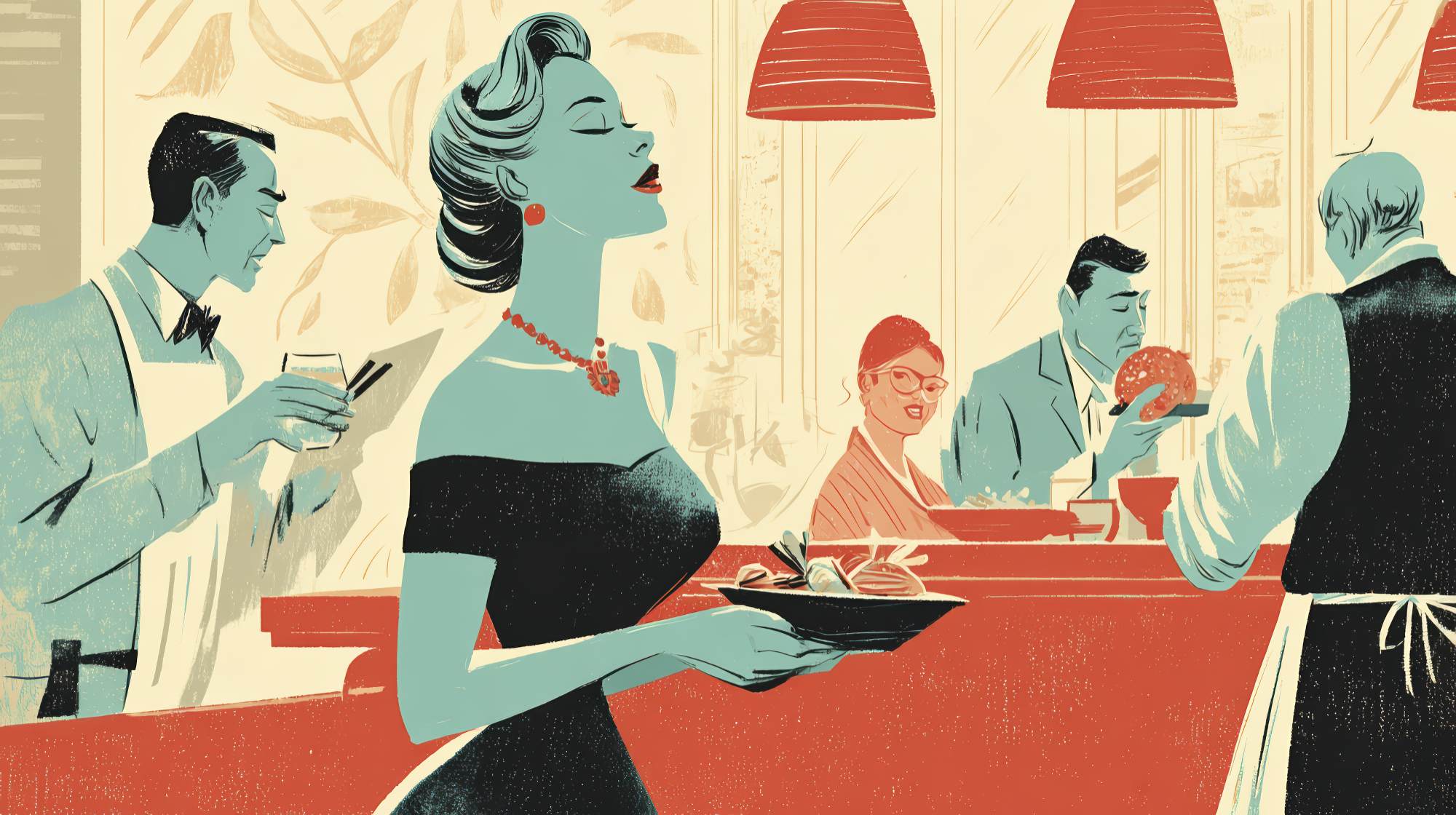
Move beyond trends to narratives that reinforce lasting brand strength.
For established restaurants, social media should not feel like a daily scramble for relevance. If your team is constantly asking what to post, what trend to join, or how to “boost engagement,” the real issue usually is not creativity. It is clarity. The strongest restaurant brands do not win because they post more. They win because they tell a consistent story people recognize, trust, and want to be part of.
That matters even more for restaurants with history, reputation, and a loyal customer base already in place. A newer concept can get away with chasing novelty for a while. An established restaurant cannot. The stakes are different. Every post either strengthens your brand equity or chips away at it.
Social storytelling, when done well, is not about performing for the algorithm. It is about translating what makes your restaurant meaningful into a steady stream of recognizable moments. That is how you stay culturally current without becoming culturally disposable.
Why established restaurants need a different social strategy
A lot of restaurant social media advice is built for brands that are still trying to get noticed. That advice tends to overvalue attention and undervalue identity. For a restaurant that has already earned trust in its market, attention is not the only goal. The real goal is to remain desirable while deepening loyalty.
This is where many established restaurants get pulled off course. They start copying the content style of trend-driven brands that have entirely different business needs. Suddenly, a restaurant known for warmth, craft, and consistency is posting like a startup trying to go viral by Friday.
That disconnect is easy for guests to feel, even if they cannot quite articulate it. Social content that does not match the real-world experience creates friction. It makes the brand feel less confident, less distinct, and in some cases, less premium.
The better approach is to use social as an editorial extension of the dining experience. If your restaurant is known for hospitality, the content should feel hospitable. If it is known for ritual, legacy, or craft, that should shape the tone and cadence. You do not need to reject trends outright. You just need to filter them through a stronger point of view.
Storytelling is not the same as posting content
One of my stronger opinions on restaurant marketing is this: a lot of social content is busy, but very little of it says anything. Beautiful food photography is not a story on its own. Neither is a chef plating video, a cocktail pour, or a dining room reel with cinematic music. Those assets can support a narrative, but they are not the narrative.
Storytelling starts with deciding what your restaurant consistently represents in the mind of a guest. Not your full origin story. Not a bloated brand manifesto. Just the handful of truths that should come through again and again.
For some restaurants, that might be generational stewardship. For others, neighborhood belonging. For others, seasonal craftsmanship, understated luxury, celebratory dining, or a particular kind of ease that regulars instantly understand.
Once you know those truths, your social presence becomes much easier to manage. You stop asking, “What should we post today?” and start asking, “What part of our story are we reinforcing?” That shift sounds small, but it changes everything.
It means your chef content is not just about skill. It is about standards. Your staff features are not just about personality. They are about culture and hospitality. Your food photography is not just about appetite appeal. It is about restraint, abundance, ritual, or whatever your brand actually stands for.
The most effective restaurant narratives are built from recurring themes
Established restaurants do not need a brand new angle every week. In fact, that is usually a mistake. Strong brands are built through repetition with nuance. The social storytelling framework I prefer is simple: define three to five narrative pillars and rotate them consistently.
For example, a refined neighborhood restaurant might build content around these themes:
craft in the kitchen, continuity and legacy, the feeling of the room, staff hospitality, and seasonal change.
That gives the marketing team structure without making the feed feel rigid. It also prevents one of the most common problems in restaurant marketing: over-indexing on menu items while ignoring the broader emotional value of the brand.
People do not return to restaurants just because a dish looks good online. They return because the place means something to them. The role of social is to remind them why.
This is also why recurring formats can be useful when they are done with taste. A weekly cellar highlight, a short chef note on ingredients, a host’s perspective on the evening mood, a quiet before-service moment, a regular seasonal marker on the menu. These are not flashy ideas, and that is the point. They build familiarity. Familiarity builds recognition. Recognition builds preference.
How to make your social presence feel more editorial and less promotional
The fastest way to cheapen an established restaurant brand on social media is to make every post sound like an ad. Constant calls to reserve, order now, book today, limited time, don’t miss out. That language has its place, but if it dominates the feed, the brand starts to feel transactional.
An editorial approach creates more long-term value. It treats social as a publication, not just a sales channel. That does not mean becoming precious or overly literary. It means developing taste in what you show, how you say it, and what you choose not to say.
Good editorial restaurant content has a point of view. It notices details. It respects the intelligence of the audience. It understands that not everything needs to be announced with maximum excitement.
Instead of saying, “Try our new spring menu today,” you might frame the shift as a return to brightness after a heavier season, highlighting one ingredient, one preparation, or one mood the menu is designed to evoke. Instead of posting a staff photo with “meet the team,” you might share how a longtime employee shapes the guest experience in ways regulars feel but rarely see.
This kind of content performs well not because it screams for attention, but because it feels considered. In a crowded feed, consideration stands out.
Practical ways to refine your storytelling without overhauling everything
If your restaurant already has an active social presence, you do not need to start over. Most of the time, the better move is refinement. Tighten the story, elevate the language, and create more consistency in what the audience experiences over time.
Start by auditing your last 30 posts. Ask a few blunt questions. Would a new guest understand what makes this restaurant distinct? Does the tone feel aligned with the actual experience? Are we showing too much variety and not enough identity? Are we talking like marketers instead of hosts?
Then, build a clearer content mix. A good baseline for an established restaurant might look something like this:
40 percent brand atmosphere and experience, 25 percent food and beverage craftsmanship, 20 percent people and hospitality, 10 percent legacy or philosophy, and 5 percent direct promotion.
That mix will vary by concept, but the principle holds: the brand should feel like more than its latest dish.
Caption writing is another area where small changes make a huge difference. If every caption starts sounding interchangeable, your brand voice is too generic. Write shorter when possible. Say one thing well. Avoid exaggerated hype. A little restraint often reads as more confident, especially for established restaurants.
Visually, consistency matters more than perfection. You do not need every image to look like a campaign shoot, but you do need a recognizable standard. Lighting, framing, pacing, and editing style all contribute to the story. If one post feels polished and timeless and the next feels chaotic and trend-chasing, the brand starts to blur.
What trends are actually worth paying attention to
I am not anti-trend. I am anti-dependence. Trends can be useful when they reveal a shift in audience behavior or platform language. They are less useful when they pressure a mature brand into acting out of character.
The trends worth watching are usually structural, not superficial. Short-form video is not a trend in the same way an audio meme is. Audience appetite for personality, texture, and behind-the-scenes access is not a trend in the same way a viral editing style is.
Established restaurants should pay attention to how people consume content now, but they should interpret those shifts through their own identity. That might mean more movement in video, more voice in captions, more human presence, or more moments that capture the pace and rhythm of service. It does not mean copying whatever is currently circulating just to prove you are paying attention.
A simple rule: if a trend helps you express your brand more clearly, use it. If it asks you to become a different brand, skip it.
Lasting restaurant brands are remembered in layers
The restaurants that stay relevant for years are rarely the loudest. They are the ones that keep giving people reasons to remember them. Not just through food, but through feeling, language, ritual, and atmosphere. Social media should support that memory structure, not distract from it.
For established restaurants, this is the real opportunity. You already have substance. You already have stories worth telling. The job is not to invent a personality for the internet. It is to articulate the one that already exists in the room.
That takes discipline. It takes a little more confidence than trend-chasing does. But it also creates the kind of brand strength that compounds over time.
And honestly, that is the better game. Not posting to keep up, but communicating in a way that makes your restaurant more recognizable, more trusted, and more wanted with every passing season.