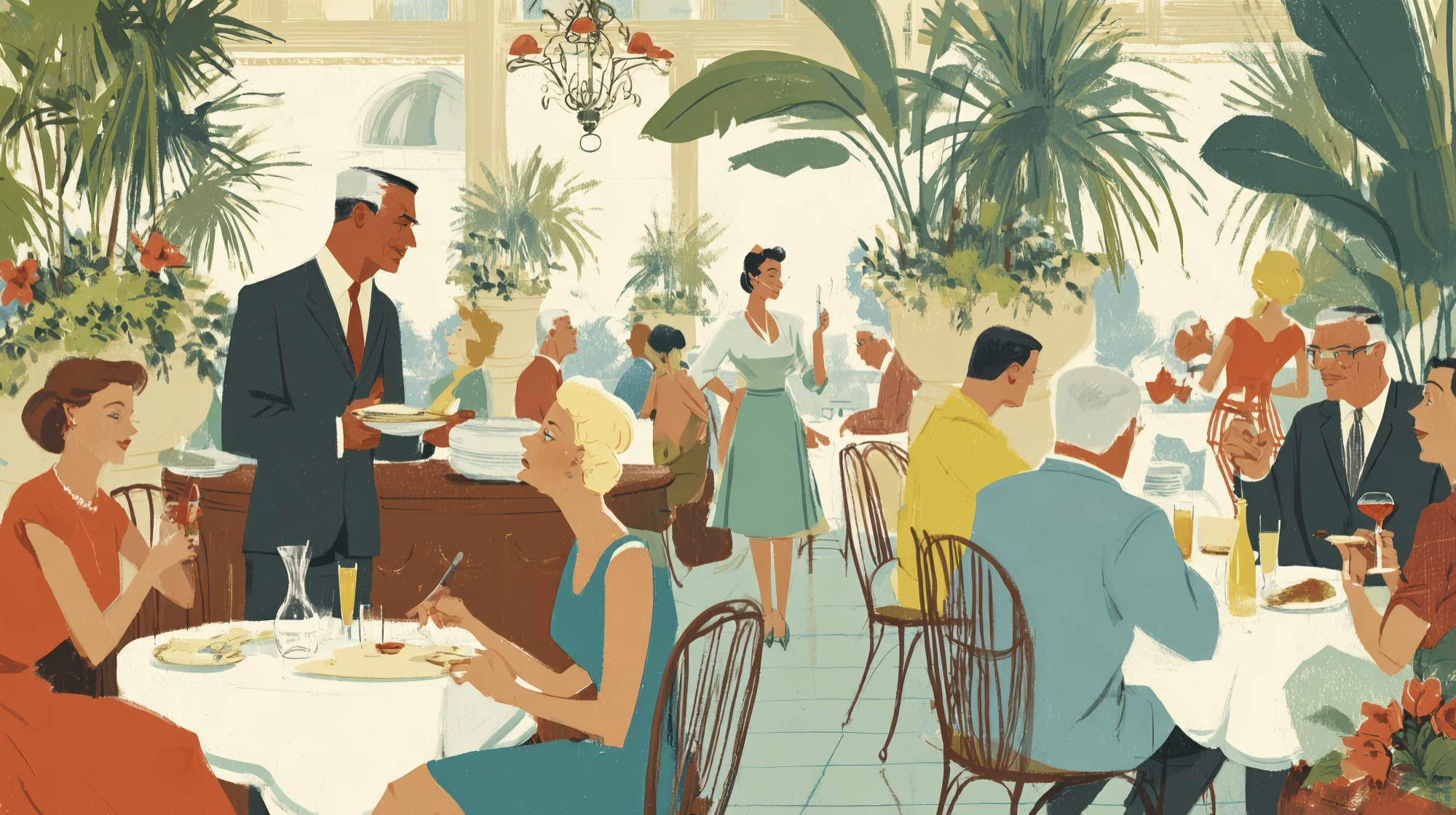
Differentiate your restaurant in a saturated hospitality market.
Opening a new restaurant used to be mostly about location, food quality, and a decent opening-week buzz. Those things still matter, obviously. But today, they’re not enough. In most cities and even smaller markets, diners are spoiled for choice. They’re not just deciding where to eat. They’re deciding which story they want to step into, which identity they want to be associated with, and which place feels worth talking about afterward.
That’s where brand positioning stops being a “marketing exercise” and starts becoming a business decision. If you’re launching a new concept, your brand cannot be an afterthought handled with a logo, a moody photoshoot, and an Instagram grid. It needs to answer a much tougher question: why should anyone care about this restaurant when there are already ten others competing for the same occasion, budget, and attention?
Strong restaurant brands are rarely built by trying to please everyone. They win by being clear, specific, and memorable. That kind of positioning doesn’t happen by accident. It comes from making choices early, and sticking to them long enough for the market to recognize what makes you different.
Positioning Is Not Decor
A lot of new operators confuse branding with aesthetics. They spend months debating fonts, plateware, wall textures, and what color the host stand should be. Meanwhile, the actual brand position remains fuzzy. The result is a restaurant that looks polished but feels interchangeable.
Brand positioning is not your visual identity. It’s the strategic space you want to occupy in the customer’s mind. It’s what people say about you when they recommend you. It’s the shortcut they use to understand your place. “That’s the neighborhood spot with serious wine but no pretension.” “That’s the late-night place where the food is better than it has any right to be.” “That’s the modern Mediterranean place for people who are tired of generic date-night restaurants.”
If your concept can’t be described in a sentence that means something, you probably don’t have a positioning strategy yet.
New restaurant concepts especially need discipline here. You are not building from nostalgia, institutional reputation, or years of word-of-mouth. You are entering a crowded field and asking strangers to choose you. The market will define your restaurant for you if you don’t define it first. Usually in the most boring way possible.
And here’s the truth: “quality ingredients,” “great service,” and “welcoming atmosphere” are not differentiators. They’re the baseline. Every restaurant says those things. Positioning begins where generic promises end.
Start With the Market, Not Your Mood Board
The most useful thing a new operator can do is get honest about the competitive landscape. Not just who serves similar food, but who competes for the same dining occasions. Your biggest threat may not be another restaurant with your cuisine. It may be the polished all-day café getting lunch traffic from your target customer, the neighborhood wine bar taking your date-night audience, or the premium fast-casual brand eating away at your weekday convenience business.
Before you launch, you should know:
Who already owns the premium version of your category.
Who owns the accessible version.
Who is overdesigned and underdelivering.
Who is beloved but aging.
Who gets social media attention but weak repeat business.
And where there’s whitespace no one is owning clearly.
This is where many founders get too romantic. They become attached to a concept vision without checking whether that position is already taken, or worse, whether customers even want it. Market awareness isn’t compromise. It’s strategy.
If you’re entering a saturated segment, subtle differences are not enough. You need a point of view. Maybe your brand is intentionally tighter, more energetic, more design-forward, more ingredient-led, more neighborhood-rooted, less formal, more ritualized, or more culturally specific. But it has to be legible. Consumers are moving fast. They will not work hard to decode your concept.
One of my strongest opinions on this: restaurants overestimate how original they are and underestimate how quickly people categorize them. The goal isn’t to sound revolutionary. The goal is to be instantly understood and clearly preferred by the right audience.
Define the Customer With More Precision Than “Foodies”
“Food lovers” is not a target audience. Neither is “everyone.” If your concept is for everyone, your messaging will become bland, your experience will get diluted, and your marketing will default to whatever trend feels safest in the moment.
Good positioning requires a more specific customer picture. Who are they really? What are they tired of? What trade-offs are they willing to make? What do they value enough to pay for? What signals make them trust a new place? What makes them feel like a restaurant is “for people like me”?
The strongest restaurant brands don’t just match demographics. They align with identity and behavior. They understand whether their customer wants discovery, comfort, status, convenience, ritual, indulgence, or social currency. Often, they want a mix of those things, but one usually leads.
For example, a new concept aimed at young urban professionals may fail if it assumes that group wants upscale formality. In many markets, that audience is actually drawn to places that feel effortless, culturally current, and high-quality without the performance of luxury. On the other hand, a suburban dinner crowd may want clarity, consistency, and enough polish to feel like the evening is worth leaving the house for.
The point is this: brand positioning works best when it reflects how people want to feel, not just what they want to eat.
When you know your customer clearly, decisions get easier. Menu language sharpens. Interior choices stop being random. Social content sounds more natural. Partnerships make sense. Even service style becomes part of the same coherent story.
Your Brand Has to Show Up in the Experience
A weakly positioned restaurant often tries to compensate with marketing volume. More posts, more ads, more influencer invites, more launch events. But if the brand promise isn’t embodied in the actual experience, all that promotion just accelerates disappointment.
Your positioning has to live in operational reality. If you say your concept is warm and neighborhood-driven, but the staff scripts sound corporate and the room feels cold, customers notice. If you position the restaurant as chef-led and detail-obsessed, but the menu reads confused and the plating feels inconsistent, trust erodes quickly.
This is where experienced operators usually have an advantage: they understand that branding is a chain of small consistencies. The host greeting, lighting level, reservation language, menu design, pacing, playlist, uniforms, bathroom details, to-go packaging, and even how the bill is presented all either reinforce your position or weaken it.
That doesn’t mean everything needs to be theatrical. In fact, some of the best-positioned restaurants are surprisingly restrained. They simply know who they are, and every customer touchpoint reflects it. Nothing feels accidental.
If you want practical advice, audit your concept through one lens: does this feel like the same brand at every stage of the visit? From first Instagram impression to post-meal memory, the answer should be yes.
Messaging Should Be Sharp, Not Overwritten
New restaurants often make their messaging too complicated. They try to explain the founder’s life story, culinary influences, sourcing philosophy, local commitment, travel inspiration, hospitality ethos, and design narrative all at once. The result is a wall of words that says very little.
Customers do not need your entire backstory upfront. They need a compelling reason to care now.
Your messaging should communicate three things quickly: what kind of place this is, who it’s for, and why it’s worth choosing over alternatives. That’s it. Once customers are interested, you can layer in more nuance.
This applies especially to your website homepage, Instagram bio, Google Business description, press outreach, and opening campaign. If those channels are vague, overly self-important, or loaded with industry jargon, you’re making it harder for people to connect.
I’m a big believer in plainspoken confidence. Say what you are. Say what makes it special. Avoid inflated claims. Restaurants that sound too polished often feel the least trustworthy. The best messaging has a little specificity, a little restraint, and just enough personality to feel human.
And please, resist the urge to call everything “elevated.” That word has lost all meaning in hospitality marketing.
Launch With a Point of View, Then Repeat It Relentlessly
There’s always a temptation to keep tweaking the concept after launch. A little more broad appeal here, a little trend-chasing there, a small pivot to please a louder online audience. Sometimes adjustments are necessary. But too many new restaurants start diluting themselves before the market has even had time to understand them.
A clearer approach is to launch with a defined point of view and repeat it consistently across channels. Your early audience needs repetition. They need to encounter the same signals enough times that the brand becomes familiar and ownable.
That means your opening PR, social content, email marketing, photography, menu copy, and in-house storytelling should all support the same position. Not mechanically, but coherently. If your concept is built around ingredient obsession, show sourcing, technique, and flavor detail. If it’s built around energy and occasion, show the room, the rhythm, and the atmosphere. If it’s about neighborhood belonging, spotlight regulars, local connections, and accessibility.
Too many restaurants market themselves like they’re trying to win every possible customer. In reality, momentum usually starts when the right customers become advocates. Distinct brands create stronger word-of-mouth because they’re easier to describe, easier to remember, and easier to recommend.
That matters more than reach. A restaurant doesn’t need universal appeal. It needs a clear identity that attracts people who are likely to return, bring others, and talk about it with conviction.
Differentiation Is a Long Game, Not a Launch Stunt
There’s a bad habit in restaurant marketing of treating differentiation like an opening tactic. Create a splashy campaign, host a packed launch event, get a few nice media hits, and assume the brand is established. It isn’t. Awareness is not the same as positioning.
Real differentiation is built over time through consistency. The market starts to believe your brand when the experience matches the promise repeatedly. That’s when reputation forms. That’s when a restaurant moves from “new place people are trying” to “place people identify with.”
For new concepts, that’s the real goal. Not just trial, but association. You want to own something specific in the minds of guests. A feeling, a standard, an occasion, a perspective. That ownership becomes incredibly valuable because it protects you from becoming just another option in a crowded field.
In a saturated hospitality market, blandness is expensive. It forces you to work harder for every reservation, every mention, every repeat visit. Clear positioning, on the other hand, creates leverage. It gives your team focus, your marketing direction, and your customers a reason to choose you with confidence.
If you’re building a new restaurant concept right now, my advice is simple: decide what space you want to own before the market decides for you. Be more specific than feels comfortable. Make choices that rule some people out. Build the experience to match the promise. Then repeat that promise until it becomes recognizable.
That’s how new concepts stop blending in. And in this business, that’s not cosmetic. It’s survival.